

i-LIGHT PRO · $349 $449 FREE TRACKED SHIPPING WORLDWIDE 30-DAY MONEY-BACK · 1-YEAR WARRANTY

i-Light Pro · Curing light with a built-in power meter

You can do everything right with a restoration — and still lose it at the very last step.

Isolation. Matrix. Contact. Bonding. Composite. Anatomy. You control every step. Then you pick up the curing light. It turns on. There's blue light. So everything must be fine, right? Not necessarily.

  • Curing light with a power meter built into the charging base
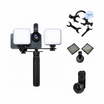
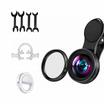
  • Magnetic lenses for interproximal, localized and narrow access
  • 360° handpiece and a separate Detect mode — one cordless device
30-day money back 1-year Dentiphoto warranty Free tracked shipping
A dentist holding the i-Light Pro, surrounded by the separate devices it replaces
10,000+orders shipped by Dentiphoto
4.9store rating
391,000professionals follow us
2019serving dentists since
1 yearwarranty and direct support

The blind spot

A curing light that turns on is not necessarily a curing light that performs

That's the uncomfortable part. A weak curing light does not have to look broken. It turns on. The timer works. The patient sees blue light. The surface of the composite feels hard. But what is happening underneath? You cannot tell by looking at it.

And that is why the problem often shows up later:

  • the patient comes back with sensitivity
  • the restoration debonds
  • you see a chip or marginal breakdown
  • “Why is this Class II back again?”
  • you end up redoing work you already spent time on once
Close-up of the i-Light Pro tip emitting blue curing light

Built-in power meter

Check the light before you have to check the restoration

The power meter is built directly into the charging base. Place the light. Check the output. Start working. Not “it looks fine” — a number you can actually see.

No separate radiometer to buy. Nothing extra to remember or find. The check happens exactly where the light already sits, between patients.

The i-Light Pro in its charging base showing an output reading of 2980 mW/cm²

One system

One curing light should not lead to three more purchases

The usual way

A light. Then a radiometer. Then optics. Then a diagnostic light.

More chargers, more accessories, more storage, more equipment to keep track of. Usually, when you want more control, you start building the setup piece by piece — and every piece is another purchase and another place where the workflow can break down.

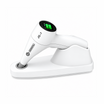
i-Light Pro standing in its charging base with lenses beside it
Curing Lightfor everyday restorative work
Power Meterbuilt into the charging base
Magnetic Lensesfor different clinical situations
360° Handpiecefor better access in the posterior
Detect Modeadditional diagnostic illumination

One handpiece. One base. One kit. Fewer devices on the counter, fewer separate purchases, fewer places where the workflow can break down.

The 7 reasons

Stop treating your curing light like “just a light”

01Where the restoration is finalized

Because this is where the entire restoration is finalized

You can achieve perfect isolation. Etch correctly. Follow the bonding protocol. Place composite in controlled increments. Build the contact. Create beautiful anatomy. But until the material has received adequate curing, the restoration is not finished.

Curing is not a technical formality at the end of the procedure. It is one of the steps that determines whether your work stays the way you made it. That makes the curing light a strange place to accept uncertainty.

02“It still lights up”

Because “it still lights up” is a terrible way to check a curing light

In dentistry almost everything gets checked. Contact — with floss. Occlusion — with articulating paper. Working length — with an apex locator. Shade — with a guide or a spectrophotometer. And curing light output? Very often — not at all.

As long as the light turns on, it is assumed to be working. That is exactly why the power meter sits in the charging base: check the output, then start the procedure. That is what a normal workflow should look like.

Output reading shown on the i-Light Pro charging base
03Comebacks

Because nobody wants to see their fillings come back on the schedule

What you open the chart and read

“Sensitivity after filling.”chair time
“Filling chipped.”chair time
“Filling came out.”chair time

Now you need to find a slot. Bring the patient back. Figure out what happened. Possibly isolate again. Restore again. And nobody is paying you twice for the same restoration.

The point

If you can check the light, why keep guessing?

Inadequate curing is not the only reason restorations fail. But it is definitely not a variable you want to leave unchecked.

04Access

Because the distal of a second molar should not turn into gymnastics

Posterior. Limited opening. Cheek. Matrix. Your hand. Your assistant's hand. And somewhere in the middle of all that, you still need to position the light tip properly.

Angle matters. Distance matters. Light delivery matters. That is why the handpiece rotates 360° — you adapt it to the tooth, instead of asking the patient to open another two centimetres because of the shape of your curing light.

Curing a posterior restoration with the angled i-Light Pro tip
05Interchangeable optics

Because one light tip is not ideal for every clinical situation

Occlusal restoration. Class II. Interproximal. Veneer. Fibre post. Limited access. These are not the same clinical situation — so why should light delivery always be the same?

Point Curefor localized curing
Proxi Curefor interproximal and gingival areas
Endo Guidefor narrow, hard-to-reach areas

The lens changes in one movement. No second handpiece. No second device. The clinical situation changes — the curing light does not have to.

Magnetic lenses laid out on a tray beside the i-Light Pro
06A system, not gadgets

Because a clinic needs a working system — not a collection of gadgets

For one dentist, several separate devices are annoying. For a clinic with multiple operatories they become something you have to manage. Where is the radiometer? Who has the diagnostic light? Which lens belongs to which device? Was this curing light checked? When? By whom?

The more separate pieces you have, the more places there are for control to disappear. Curing, output measurement, interchangeable optics and additional modes in one setup is easier to buy, easier to place in an operatory, easier to train the team on, easier to build into a protocol.

The full i-Light Pro kit: handpiece, base with power meter, four lenses
07What a good light should do

Because a good curing light should protect your work — not just produce blue light

Do you need another basic curing light? Probably not — you already have one. The real questions are different:

  • Does it show you how much output it is delivering today?
  • Does it have a built-in meter?
  • Can you adapt it for posterior and interproximal access?
  • Does it give you different optics for different tasks?
  • Do you need another device for that? Another charger? Another purchase?

If the answer keeps being “no / no / separately” — maybe you don't need another curing light. Maybe you need a proper curing system.

The arithmetic

Don't calculate the cost of the light. Calculate the cost of one comeback.

What one comeback actually takes

Another appointment slotchair time
Assessing the sensitivity or debondingyour time
Removing the restoration, isolating againagain
Composite, adhesive, another matrixmaterials
Assistant timeagain

One comeback is not just an unhappy patient. It is an appointment slot you could have used for another procedure.

The device

$349. Once.

And if the reason was a curing light that had been running out of spec for months — that is one of the most expensive ways to discover you should have checked it earlier.

Now compare

A standard curing light vs. i-Light Pro

i-LIGHT PRO
A standard curing light
Curing
Yes
Yes
Output check
Power meter in the charging base
A separate radiometer
Difficult access
Magnetic lenses + 360° handpiece
Separate solutions
Diagnostic light
Detect mode, same handpiece
A separate device
Working modes
7 modes
Usually one or two
What you manage
One device, one workflow, one kit
Multiple devices, purchases, points of control

Cure. Check. Adapt. Detect. All from one handpiece.

Don't buy another light

Replace several devices with one

i-Light Pro was not designed to add another dental gadget to your countertop. It was designed to replace several separate solutions with one tool you use every day.

  • Curing light, power meter, magnetic lenses, 360° handpiece, Detect mode
  • Cordless, charges on its base between patients
  • Free tracked shipping · 30-day money-back · 1-year Dentiphoto warranty

Buying for several operatories? Write to support@dentiphoto.com and we'll prepare one invoice for the practice.

$349 $449 Save $100

One-time price. US and EU plug versions, both in stock.

30-day money back 1-year warranty Insured parcel

Before you decide

The three questions dentists actually ask

“I already have a curing light.”

Of course you do — almost every practice does. So the question is not whether you have a curing light. The question is how many other devices you need around it to do what i-Light Pro already does. A separate radiometer is a second device. Additional optics are more equipment. A separate diagnostic light is another device. i-Light Pro brings those tasks into one system.

“Why do I need a built-in power meter?”

Because you cannot measure light output with your eyes. A curing light may continue to switch on even when the output you are relying on has changed. With i-Light Pro, checking the light does not require a separate radiometer — it is already built into the charging base. You can check the light before you start, not after the first comeback.

“Can inadequate curing really contribute to restoration failure?”

Yes. Insufficient polymerization can negatively affect the physical properties of resin-based materials and may contribute to lower bond strength, marginal breakdown, fracture, post-op sensitivity, debonding and restoration failure. That does not mean every failure is caused by the curing light. It means something much simpler: if you can control this variable, there is no reason to leave it to chance.

You already did the hard part

Don't leave the last 20 seconds to guesswork

Isolation. Bonding protocol. Layering. Contact. Anatomy. Finishing. Make the curing light part of your quality control — not the weak link at the end.

One device instead of a curing light, a separate power meter and multiple additional solutions.

Dentiphoto · Equipment for dental professionals since 2019 support@dentiphoto.com · answered within 24 hours
i-Light Pro · $349 $449 Get i-Light Pro