







VITA-Farbkonverter
Kostenloses Tool von Dentiphoto
VITA-Zahnfarbenumrechner – Classical A1–D4 ↔ 3D-Master
Wählen Sie die Zahnfarbe aus, die Sie bereits haben, und erhalten Sie die nächstgelegene Zahnfarbe im anderen System – mit einer ehrlichen Vertrauensbewertung, da VITA nie eine universelle Umrechnungstabelle veröffentlicht hat.
Für ein möglichst konsistentes Ergebnis empfehlen wir, die Zahnfarbe mit dem digitalen Dentiphoto-Zahnfarbenführer zu bestätigen – er liest beide Systeme direkt am Zahn ab und zeigt, wie weit die Übereinstimmung abweicht.
Warum die Zahlen nicht übereinstimmen
Die beiden Systeme wurden nie dafür entwickelt, aufeinander abgebildet zu werden
VITA Classical A1–D4 (1956) wurde empirisch danach geordnet, wie häufig natürliche Zahnfarben vorkommen. VITA 3D-Master (1998) wurde entwickelt, um den Farbraum in gleichmäßigen Abständen abzudecken. VITA hat nie eine universelle Zuordnungstabelle zwischen den beiden Systemen veröffentlicht – nur Näherungen für die „bestmögliche Übereinstimmung“, die an bestimmte Produktformen gebunden sind. Deshalb zeigt dieses Tool einen Vertrauenswert an, statt so zu tun, als wäre jede Umrechnung exakt.
Den Bildschirm ablesen
Wenn Sie einen digitalen Dentiphoto-Zahnfarbenführer verwenden
Das Gerät liest beide Systeme aus einer einzigen Messung ab und kennzeichnet das Ergebnis farblich entsprechend der tatsächlichen Übereinstimmung.
Exakte Übereinstimmung. Verwenden Sie die Zahnfarbe unverändert.
Der Zahn liegt zwischen zwei Zahnfarben. Das Gerät zeigt beide an – der höhere Wert entspricht der besseren Übereinstimmung. Bei 3D-Master können Sie die beiden Materialien im Verhältnis 1:1 mischen oder die interpolierte Zahnfarbe bestellen; bei Classical wählen Sie den höheren Wert, da klassische Zahnfarben nicht gemischt werden können.
Große Abweichung. Senden Sie ihn nicht ins Labor. Messen Sie erneut, sonst kann der Zahn vollständig außerhalb des Bereichs des Zahnfarbenführers liegen.
Der E220 zeigt außerdem einen ΔE-Wert – wie weit der Zahn tatsächlich von der nächstgelegenen Zahnfarbe entfernt ist. Ihre Farbstäbchen liefern Ihnen einen Namen. Eine Zahl können sie Ihnen nicht liefern.
Dentiphoto Edition · Vorbestellung
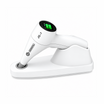
E220 Digitaler Zahnfarbenführer
VITA Classical und 3D-Master aus einer einzigen Messung in etwa einer Sekunde unter dem eigenen kalibrierten Licht. Nächstgelegene Zahnfarbe, zweitnächste Zahnfarbe und ein ΔE-Wert.
CE-zertifiziert · 1 Jahr Dentiphoto-Garantie · 30 Tage Geld-zurück-Garantie · Kostenloser Versand mit Sendungsverfolgung
Bevor Sie etwas umrechnen
Die richtige Zahnfarbe bestimmen
Sieben Dinge, die darüber entscheiden, ob sich die Umrechnung Ihrer Ausgangsfarbe gelohnt hat.
-
01
Bestimmen Sie die Zahnfarbe in den ersten 5–10 Minuten, bevor der Zahn dehydriert und heller wird.
-
02
Mittleres Drittel der labialen Oberfläche, senkrecht zum Zahnschmelz und vom Gingivarand entfernt.
-
03
Vermeiden Sie Risse, weiße Flecken, Fluorose, alte Füllungen und spiegelnde Reflexionen.
-
04
Uneinheitlicher Zahn: Lesen Sie das zervikale, mittlere und inzisale Drittel separat ab und lassen Sie den Zahntechniker entsprechend schichten.
-
05
Verwenden Sie eine standardisierte Lichtquelle – und dokumentieren Sie die Lichtbedingungen mit dem Fall.
-
06
Ersetzen Sie Ihre Farbmuster alle 2 Jahre. Das ist die eigene Empfehlung von VITA: Die Keramik verblasst.
-
07
Beurteilen Sie den Zahn, nicht das Farbmuster isoliert.
Drei Instrumente, eine Entscheidung
Drei Möglichkeiten, einen Farbton zu bestimmen
| Farbtäfelchen nach Augenmaß | Kreuzpolarisiertes Foto | Digitaler Farbschlüssel | |
|---|---|---|---|
| Was Sie erhalten | Ein Farbtonname | Ein Bild für den Zahntechniker | Beide Systeme plus ein ΔE-Wert |
| Hängt von der Raumbeleuchtung ab | Ja – Fenster, Lampe, Tageszeit | Teilweise | Nein – eigene Lichtquelle |
| Wiederholbarkeit | Variiert je nach Behandler und Tageszeit | Mittel | Konstant, wenn die Spitze korrekt positioniert wird |
| Am besten geeignet für | Einfache Fälle, gutes Licht, ausreichend Zeit | Komplexe Schichttechnik, Zusammenarbeit mit einem Zahntechniker | Bestätigung, bevor der Fall das Labor erreicht |
Das sind keine Alternativen – die meisten Zahnärzte verwenden alle drei. Die Farbmuster halten Sie in der Hand; das Gerät zeigt Ihnen, wie weit Sie danebenliegen, bevor der Fall das Labor erreicht.
Fragen
Warum zeigt das Tool „mittel“ oder „niedrig“ als Zuverlässigkeit an?
Weil die zugrunde liegende Zuordnung für diese Farbtöne tatsächlich unsicher ist. VITA veröffentlicht Näherungswerte, die an bestimmte Produktformen gebunden sind, keine Formel für einen Farbraum; außerdem teilen sich in mehreren Fällen zwei klassische Farbtöne einen 3D-MASTER-Wert. Zehn der sechzehn klassischen Farbtöne lassen sich eindeutig konvertieren, sechs nicht – und wir weisen darauf hin, statt es zu verschleiern.
Ist dies eine offizielle VITA-Konvertierung?
Nein. VITA hat nie eine universelle Konvertierungstabelle zwischen den beiden Systemen veröffentlicht. Dieses Tool basiert auf den von VITA selbst veröffentlichten Näherungswerten, die mit zwei unabhängigen Quellen abgeglichen wurden, und zeigt an, wie belastbar jeder Eintrag ist.
Warum gibt es für einige 3D-MASTER-Farbtöne kein klassisches Gegenstück?
Sechzehn der neunundzwanzig 3D-MASTER-Farbtöne haben kein Gegenstück in A1–D4. Der 3D-MASTER-Bereich ist einfach größer und deckt Zähne ab, die mit dem klassischen Farbschlüssel nicht ausgedrückt werden können. Wenn Ihr Labor mit dem klassischen System arbeitet, senden Sie zusätzlich den 3D-MASTER-Wert.
Mein Gerät zeigt zwei Farbtöne an, die nicht zu dieser Tabelle passen. Ist es defekt?
Nein. Das Gerät ermittelt anhand derselben Messung unabhängig voneinander die nächstgelegene Übereinstimmung in jedem System, sodass die beiden Werte auf der VITA-Werteskala um ein oder zwei Stufen auseinanderliegen können. Diese Abweichung ist eine Information: Je größer sie ist, desto weniger eindeutig lässt sich der Zahn in einem der beiden Systeme einordnen. Lesen Sie sie oben im Tab „Digitaler Farbschlüssel“ ab.
Kann ich den konvertierten Farbwert direkt an das Labor senden?
Bei einer Konvertierung mit hoher Zuverlässigkeit: ja. Bei mittlerer oder niedriger Zuverlässigkeit sollten Sie zuerst visuell bestätigen oder den Zahn direkt messen – genau daraus entstehen Neuanfertigungen.
Mein Farbschlüssel ist einige Jahre alt. Ist das wichtig?
Ja. VITA empfiehlt, die Farbmuster alle zwei Jahre zu ersetzen – die Keramik verblasst, und ein verblasstes Muster verfälscht jede damit vorgenommene Farbbestimmung.
VITA classical A1–D4 und VITA SYSTEM 3D-MASTER sind Marken von VITA Zahnfabrik. Dieses Tool ist eine unabhängige, von Dentiphoto veröffentlichte Referenz und wird weder von VITA Zahnfabrik empfohlen noch ist es mit VITA Zahnfabrik verbunden. Es unterstützt die klinische Beurteilung, ersetzt sie jedoch nicht.