





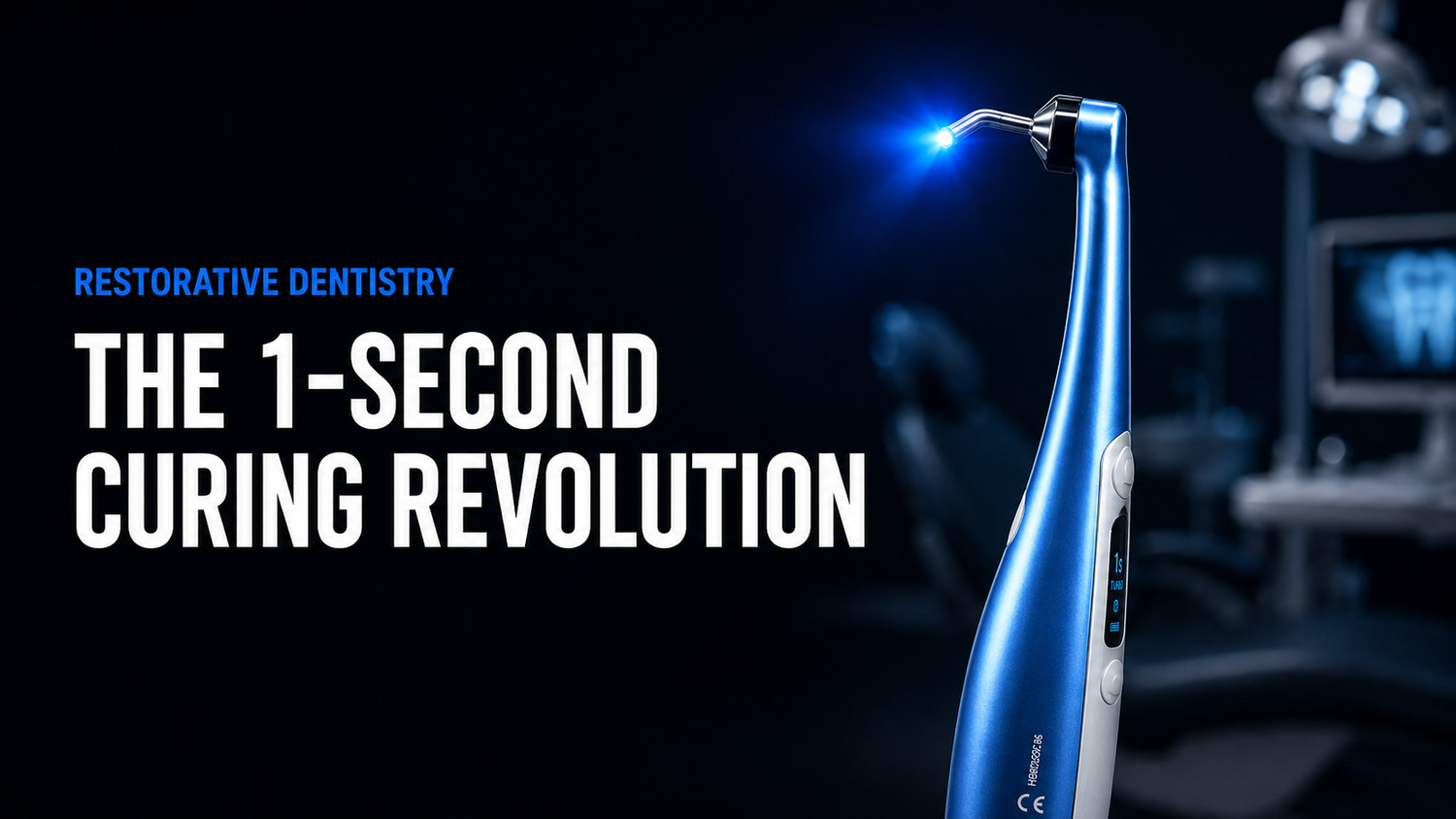
The curing light is the tool you reach for on almost every patient — and the seconds it eats up quietly compound into hours. Here's the math nobody runs, and how a high-intensity Turbo light gives that time back without compromising your cure.
The tool you use on every single patient
Composite restorations, sealants, bonding, cementation, orthodontic attachments — the curing light comes out for nearly all of it. Most operators obsess over their handpieces, their loupes, even their chairs. The curing light? It just sits there until you need it. But because you use it so often, even a few extra seconds per cure add up to something much bigger over a week, a month, a year.
The math nobody runs
A standard curing light typically asks for 10–20 seconds per increment. A single posterior composite can need several cures — each layer, plus a final surface cure. It adds up fast:
- 3–4 curing cycles at 20 seconds each ≈ 60–80 seconds of standing there, light in hand, per restoration.
- 15 restorations a day ≈ 15–20 minutes of pure "holding the light" time.
- Across a working week, that's around 90 minutes — over a year, days of clinical time spent waiting on a cure.
These are illustrative numbers, and your mix of procedures will differ. But the direction is undeniable: slow curing is a small tax you pay on almost every patient, all day, every day. Cut the cure from 20 seconds to 1, and you take that tax back.
Old curing light vs. high-intensity Turbo: side by side
| What matters | Typical old / budget light | High-Intensity Turbo LED |
|---|---|---|
| Cure time | 10–20 sec per increment | As little as 1 sec (compatible materials) |
| Light output | Lower / fades with age | 1,000–2,500 mW/cm² high intensity |
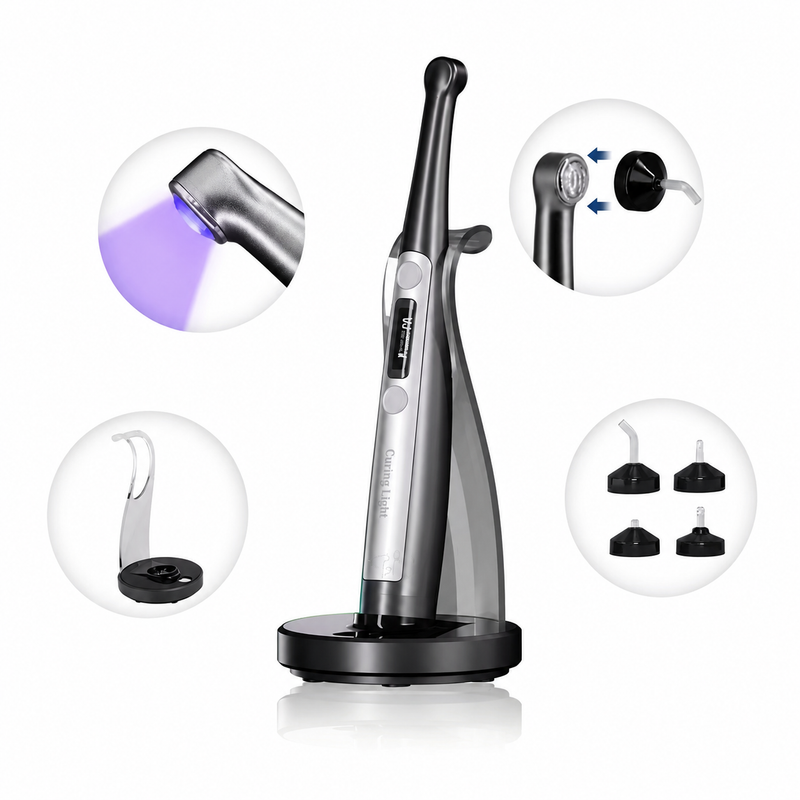
| Modes | 1–2 modes | 4 modes: Turbo · Normal · Ortho · Check |
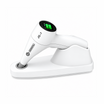
| Design | Corded, bulky | Cordless, lightweight, ergonomic |
The fastest cure times apply to compatible materials used within manufacturer protocol — always confirm cure time for the specific composite you're placing.
Why those seconds actually matter
Chair time is your most finite resource. Time spent waiting on a cure is time not spent finishing the case, resetting the room, or seeing the next patient. Shorter procedures mean a smoother schedule and more capacity — without working longer hours.
Fatigue is real. Holding a light steady, again and again, through a full day of restorations is a quiet drain on your hand, wrist and focus. By the last patient, your body knows it.
Patients feel it too. A shorter time with the mouth open and instruments in place is simply more comfortable — and comfort drives reviews and referrals.
What actually makes a light faster
When you're evaluating a curing light for speed, look past the marketing and check the fundamentals:
- Light intensity (mW/cm²). Higher irradiance delivers the required energy in less time. Outputs in the 1,000–2,500 mW/cm² range are what enable genuinely fast curing.
- A dedicated Turbo mode. For compatible composites, a high-intensity short cycle can cut curing time dramatically versus a standard 20-second hold.
- Multiple modes. Turbo for speed, plus standard, orthodontic and check modes — one light for every clinical situation.
- Cordless, ergonomic design. A lightweight wireless handpiece improves access and reduces fatigue.
- Consistent, even output. A stable beam means a reliable cure every time — fewer re-dos.
One honest caveat: never trade a proper cure for speed
Faster is only better if the material is fully polymerized. Under-curing risks weaker restorations, marginal breakdown and biocompatibility issues. The right way to go faster:
- Always follow the composite manufacturer's recommended cure time and the light manufacturer's protocol. The very shortest cycles apply to compatible materials.
- Match your light's output to the shade, increment thickness and material.
- Speed should come from higher intensity delivering the same energy faster — not from cutting the cure short.
Used correctly, a high-intensity light reaches adequate polymerization in less time. That's the real win — the same quality cure, fewer seconds.
If a faster light saves you even ~90 minutes of chair time a week, it pays for itself in weeks — then keeps paying you back on every patient.
The quick takeaway
Your curing light touches almost every patient, so its speed is one of the most leveraged upgrades in the operatory. Run your own numbers: multiply your typical cure time by the cures in a day, then by the days in a year. If the total surprises you, a high-intensity, multi-mode cordless light — used within proper curing protocol — is one of the simplest ways to reclaim chair time, reduce fatigue and keep patients comfortable.
FAQ
Can any composite be cured in 1 second?
No. The fastest cycles apply to compatible, high-reactivity materials used within the manufacturer's protocol. Always confirm cure time for the specific composite and increment you're placing.
Is a high-intensity light safe?
Used as directed — correct distance, timing and eye protection — yes. Follow the light's instructions and be mindful of soft-tissue exposure and heat with very high outputs.
Will a faster light really change my day?
For high-volume restorative and orthodontic practices, shaving seconds off every cure adds up to meaningful chair time over weeks and months.
This article is for general educational purposes and isn't a substitute for manufacturer instructions or your clinical judgment. Always follow the curing protocols specified by your material and device manufacturers.